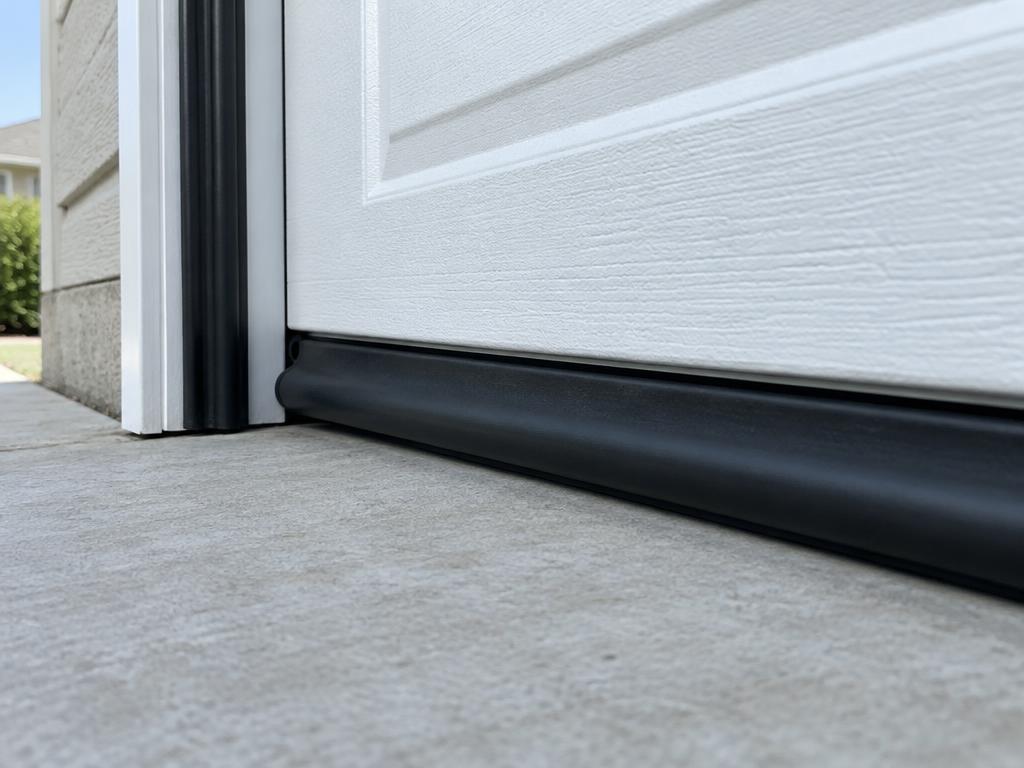
WHAT WEATHERSTRIPPING DOES FOR A GARAGE DOOR
Garage door weatherstripping in Toronto closes edge gaps with profiles suited to the door and frame. Garage door bottom seal replacement concerns the flexible strip along the lower edge, while perimeter weather seal installation addresses the sides and top of the opening. These parts help limit drafts, moisture and debris, but their fit depends on the retainer, floor and alignment of the door. Note where daylight appears when the door is closed and whether the existing material is cracked or hardened. A gap may reflect more than a worn strip.
The bottom seal, often called the astragal, is typically a flexible strip attached to the base of the door that presses against the garage floor when closed, helping to block gaps that would otherwise let in water, leaves, or pests. Side and top seals, sometimes called stop molding or weather seals, fit along the door frame to close gaps along the vertical and horizontal edges.
For Toronto homeowners, especially those with attached garages or garages used for storage or as workspace, weatherstripping plays a practical role in managing how much outside air and moisture enters the space.
WHY WEATHERSTRIPPING MATTERS IN TORONTO'S CLIMATE
Toronto experiences a full range of seasonal weather, from snow and slush in winter to heavy rain in spring and fall. Effective weatherstripping helps reduce how much of this moisture and cold air makes its way into the garage, which can be particularly relevant for attached garages where temperature differences can be felt in adjoining rooms.
During winter, worn weatherstripping can allow melting snow and slush brought in on vehicle tires to pool near gaps in the door seal, which can contribute to moisture sitting around the base of the door. In warmer months, gaps in weatherstripping can allow dust, pollen, and small insects to enter the garage more easily.
Maintaining weatherstripping in good condition is one of the more straightforward ways homeowners can manage how their garage interacts with the surrounding outdoor environment throughout the year.
SIGNS WEATHERSTRIPPING NEEDS REPLACEMENT
Weatherstripping that has become brittle, cracked, or torn is one of the clearest signs it needs attention, since these conditions prevent the seal from pressing evenly against the door frame or floor. Visible daylight showing through gaps around the door's edges when it is closed is another straightforward indicator.
Homeowners might also notice increased drafts near the garage door, water intrusion along the base after rain or snowmelt, or more debris and leaves finding their way into the garage than in previous seasons. In some cases, the rubber material may have simply hardened and lost its flexibility due to age and temperature exposure, even if it has not visibly cracked.
Because weatherstripping is exposed directly to the elements every time the door is used, it tends to wear at a different pace compared to other garage door components, and checking its condition periodically is a reasonable part of general upkeep.
TYPES OF GARAGE DOOR WEATHERSTRIPPING
Bottom seals come in a few common profiles, including bulb-shaped seals that compress against the floor and T-shaped or bead-style seals that fit into a track along the bottom of the door. The right type often depends on the design of the door's bottom edge and the retainer it uses to hold the seal in place.
Side and top seals are typically installed along the door frame itself rather than the door, using a track or nailed-in strip that holds a flexible vinyl or rubber flap against the closed door. Some garages also use a threshold seal attached to the garage floor itself, which can provide an additional barrier against water entering from outside.
Selecting the appropriate weatherstripping type involves considering the existing retainer system on the door and frame, since replacement seals generally need to match the mounting style already in place.
THE WEATHERSTRIPPING REPLACEMENT PROCESS
Replacing bottom seal weatherstripping typically involves removing the old, worn seal from its retainer track along the base of the door and sliding a new seal into place, trimming it to match the width of the door. The technician checks that the new seal makes consistent contact with the garage floor across the full width of the door.
For side and top seals, the process involves removing the old vinyl flap or seal from the frame-mounted retainer and installing a new one, adjusting it so it meets the closed door evenly without gaps. Because garage floors are not always perfectly level, some adjustment may be needed to achieve a consistent seal along the bottom.
After installation, the technician typically opens and closes the door to confirm the new weatherstripping is functioning properly and not interfering with the door's movement along the tracks.
WEATHERSTRIPPING AND ENERGY CONSIDERATIONS
For attached garages, particularly those below or beside living space, the condition of the door's weatherstripping can play a role in how much outside air infiltrates the garage and, by extension, the adjoining areas of the home. While a garage door seal is just one part of a home's overall envelope, it is a detail worth maintaining for attached structures.
Homeowners who use their garage as a workspace or for storing items sensitive to temperature and moisture, such as paint, tools, or seasonal items, may find that well-maintained weatherstripping helps manage the conditions inside the garage more consistently throughout the year.
While weatherstripping alone does not fully insulate a garage, it works alongside an insulated door, if the home has one, to help manage drafts and moisture at the door's perimeter.
WEATHERSTRIPPING MAINTENANCE TIPS
Periodically wiping down the bottom seal to remove dirt, salt residue, and debris can help it maintain flexibility and seal more effectively against the garage floor. Avoiding the use of harsh chemical cleaners directly on rubber or vinyl seals can help prevent the material from drying out prematurely.
Visually checking the seals once each season, particularly before winter when temperature extremes can affect rubber flexibility, gives homeowners a chance to notice cracking or hardening before it becomes a larger gap issue. Clearing leaves and debris away from the base of the door, especially in autumn, helps the bottom seal maintain even contact with the floor.
If a vehicle or object has recently made contact with the garage door frame, checking the side seals in that area for any resulting gaps or misalignment is a reasonable precaution.
WEATHERSTRIPPING FOR TORONTO GARAGE TYPES
Detached garages without heating may experience more pronounced temperature extremes, which can accelerate the hardening process in rubber weatherstripping compared to garages that maintain a more moderate temperature range. These structures may benefit from more frequent seasonal checks.
Attached garages connected to living spaces often see more day-to-day foot traffic and vehicle use, which means the weatherstripping along the bottom seal experiences more direct wear from contact with tires and debris carried in from outside.
Regardless of garage type, discussing the specific conditions of a home's garage, including its orientation, insulation status, and typical usage, can help in choosing weatherstripping that suits the particular situation.
ASSESSING THE WHOLE OPENING
Sealing performance depends on the opening as well as the seal. A sloped driveway, uneven garage floor or damaged frame may create gaps that a new strip cannot fully address. Ask whether the proposed profile is compatible with the door retainer and whether the perimeter fit will be reviewed. The goal is an appropriate seal that does not interfere with safe door travel, not simply the thickest available material.
Describe where water, drafts or debris appear and whether the problem changes with wind direction or rainfall. This helps distinguish worn weatherstripping from drainage or structural concerns. Replacement seals can support the condition of the opening, but they are not a promise of waterproofing or a measured reduction in energy costs. Keep drainage paths clear and discuss unrelated building-envelope issues separately when a door seal is not the main cause.
Garage door draft reduction depends on a consistent edge fit rather than simply choosing the thickest seal. Vinyl garage door seals need the right attachment profile and room to meet the closed door without interfering with travel. A garage door threshold seal may suit some openings, but floor slope and drainage need consideration before adding a barrier. Explain where rainwater or debris appears and whether wind changes the problem. Sealing work does not guarantee waterproofing, and persistent water entry may require building or drainage attention beyond the door itself.
GETTING IN TOUCH WITH GARAGE DOOR STANDARD
Noticing a light gap, draft or worn bottom seal? Call 647-560-8374 to discuss garage door weatherstripping in Toronto or request an assessment below. Describe where the gap appears and whether the floor or frame also shows damage. A compatible replacement profile and realistic sealing expectations should be discussed alongside availability before any work is arranged.
Garage door seal retainer compatibility helps determine which replacement profile can be fitted properly. For Toronto winter garage door maintenance, inspect seals for damage and remove accessible salt residue according to the manufacturer's care instructions. Attached garage weather sealing may help limit drafts, but it does not establish a particular temperature change or energy saving. Ask for a proposal that identifies the affected edges, chosen profiles and any alignment concerns. Confirm scope, pricing and availability, then retain the material and care information so future replacements match the installation.
Images are illustrative; product details, pricing and availability require confirmation.