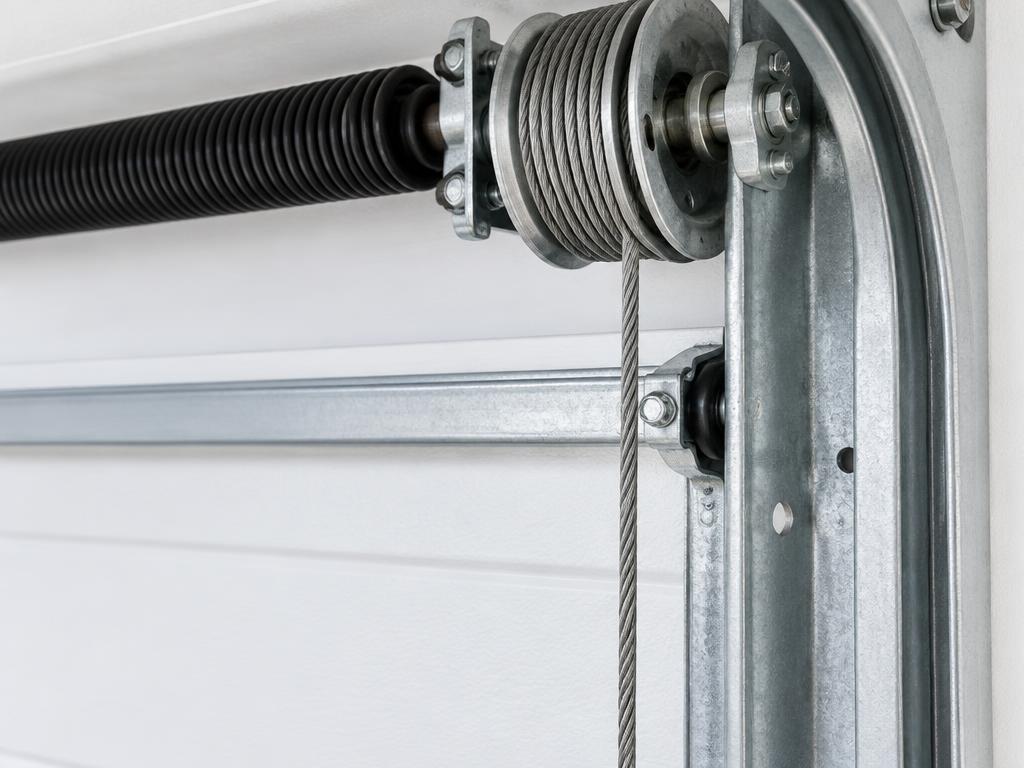
THE ROLE OF CABLES IN A GARAGE DOOR SYSTEM
Garage door cable repair in Toronto concerns the load-bearing connections between the door and its balancing system. Garage door lifting cables usually run from bottom attachments to drums on a torsion shaft, or form part of an extension-spring arrangement. Frayed garage door cables may show broken strands or corrosion even before the door stops moving. Their condition matters because both sides need controlled, even support. Do not touch a loose cable or try to guide it back into place; describe the visible condition and keep an affected door out of use.
These cables help distribute the door's weight evenly as it travels, which supports a smooth, level motion rather than one side lifting more rapidly than the other. Because of this role, cables are considered a core safety component, working in tandem with the springs to manage how the door's considerable weight is handled throughout each cycle.
Toronto homeowners may not think much about these cables during regular use, since they are usually tucked along the edges of the door and not something you interact with directly, but their condition has a direct effect on how safely and evenly the door operates.
SIGNS OF CABLE WEAR OR DAMAGE
One of the more visible signs of a cable problem is a door that appears uneven or tilted on one side when it is partially open or closed. If one cable has frayed, slipped off its drum, or snapped, the corresponding side of the door may hang lower than the other.
Fraying strands visible along the length of the cable, rust forming on the cable material, or a cable that appears loose rather than taut are all details worth noting. In more advanced cases, a snapped cable can cause the door to become stuck or shift suddenly, which is a clear signal that the system needs attention.
Because cables work under tension as part of the spring system, any visible irregularity is generally worth having looked at rather than waiting to see if it resolves on its own.
WHAT CAUSES CABLES TO FRAY OR BREAK
Cables are made of braided steel strands, and like any metal component under repeated tension, they experience gradual wear over the thousands of cycles a garage door goes through during its lifespan. Friction against the drum or track, especially if rollers or pulleys are not moving smoothly, can accelerate this wear in certain spots along the cable.
Corrosion is another contributing factor, particularly in garages exposed to road salt and moisture during Toronto winters. Rust can weaken individual strands of the cable over time, making it more susceptible to fraying or snapping under normal operating tension.
A cable can also be affected indirectly by other issues in the system, such as a spring that is no longer providing adequate counterbalance, which shifts additional strain onto the cables as they try to compensate for the uneven support.
WHY CABLE ISSUES SHOULD BE ADDRESSED PROMPTLY
Because cables work under tension alongside the spring system, a cable that is fraying or has already snapped affects the overall balance and safety of the door. A door that is unevenly supported can become more difficult to predict in its movement, which is a concern for anyone standing nearby or attempting to use the door.
Leaving a damaged cable unaddressed can also place additional stress on the remaining functional cable, the rollers, and the tracks, since the system is designed to share the load evenly between both sides. Over time, this imbalance can contribute to wear in other areas of the door.
Addressing a cable issue as soon as it is noticed helps keep the overall system working the way it was designed to, with weight distributed evenly across both sides of the door.
WHY CABLE REPAIR IS NOT A DIY TASK
Garage door cables are directly connected to the spring system, which means working with them involves managing the same stored tension that makes spring replacement a task for trained technicians. A cable under tension can react unpredictably if handled without the right tools and technique.
Manufacturers and safety organizations, including the Consumer Product Safety Commission, advise against homeowners attempting to replace or adjust garage door cables themselves, given their connection to spring tension and the specialized tools involved in safely managing that tension during the repair process.
For this reason, cable repair is generally handled by technicians who are familiar with how to safely relieve tension from the spring system before replacing or adjusting the affected cable.
WHAT TO EXPECT DURING A CABLE REPAIR VISIT
A technician addressing a cable issue typically starts by examining both cables, along with the drums, pulleys, and spring system they connect to, since a problem with one cable can sometimes point to a related issue elsewhere in the system. This helps confirm whether the cable itself needs replacing or whether another component is contributing to the wear.
If a cable needs to be replaced, the technician manages the tension in the spring system safely before removing the old cable and installing a new one matched to the door's specifications. Afterward, the door's balance and movement are checked across several cycles to confirm both sides are working evenly together.
Because cables are relatively inexpensive compared to some other garage door components, technicians may sometimes recommend replacing both cables together, particularly if one has already shown signs of wear, since the other is likely to be at a similar stage in its lifespan.
HOW CABLE PROBLEMS CONNECT TO OTHER GARAGE DOOR ISSUES
Cable issues rarely exist entirely on their own. A cable that has slipped off its drum might be related to a roller that is sticking, causing uneven movement along the track. Similarly, a spring that is losing tension can place additional strain on the cables as they try to compensate for reduced support.
This is why a comprehensive inspection, rather than a narrow focus on the cable alone, tends to give a clearer picture of what is happening with the door overall. Technicians often check the tracks, rollers, and spring tension together with the cables to understand how these components are interacting.
For homeowners, recognizing that cable problems often connect to other parts of the system can help explain why a repair visit may involve a broader conversation about the door's condition rather than addressing a single component in isolation.
CABLE MAINTENANCE CONSIDERATIONS FOR TORONTO HOMES
Garages exposed to road salt tracked in from vehicles during winter months can see increased corrosion on metal components, including cables, drums, and pulleys. Keeping the garage floor and lower door area reasonably clean of salt residue can be a simple way to reduce one contributing factor to cable wear.
Visually checking that the door looks level when partially open, without attempting any adjustments, is a simple observation many homeowners can make during routine use. Noticing a lean to one side early can lead to addressing a cable issue before it progresses further.
Because cable wear often develops gradually, periodic visual checks paired with professional inspections can help keep this part of the system on a technician's radar throughout the life of the garage door.
QUESTIONS TO ASK ABOUT CABLE COMPATIBILITY
A replacement lifting cable must suit the door height, hardware configuration and load requirements. Matching only its visible length is not enough. Ask whether the drums, pulleys and attachment points are suitable for the replacement and whether another fault caused the cable to leave its intended path. Replacing a cable without addressing that underlying issue may leave the original problem unresolved.
When describing cable damage, distinguish what you can see from what you suspect. Loose strands near the bottom corner, a cable hanging beside the track or an uneven panel edge are useful observations. Take a photograph only from a safe position, without touching the hardware or standing beneath the door. Keep family members away and leave any tensioned connections undisturbed until the system can be assessed.
Snapped garage door cable replacement requires attention to the cause as well as the damaged wire. Ask whether a cable drum inspection revealed worn grooves, displaced cable or another fault in the lifting system. Garage door cable tension needs to be assessed alongside spring condition and door movement, not adjusted in isolation. A suitable replacement must match the door height, fittings and load requirements. Photographs taken from a safe position can help explain what you noticed, but there is no need to stand beneath the door or loosen any connection.
GETTING IN TOUCH WITH GARAGE DOOR STANDARD
Frayed or displaced lifting cables should not be pulled back into place by hand. Call 647-560-8374 to discuss a cable repair assessment in Toronto and explain what you can see from a safe position. You can also send a request below. Confirm service coverage and availability, and ask how the cable system and associated hardware will be reviewed before agreeing to the work.
Loose garage door cable repair and garage door alignment checks may both be relevant when one side hangs lower than the other. A crooked door does not establish the diagnosis by itself, so the proposed scope should explain the inspection findings. For residential overhead door cable service, keep a record of the replacement specifications and any related drum, pulley or spring work. Confirm availability and agreed costs before arranging a visit. Follow the supplied maintenance guidance afterward rather than trying to retension the system if the original symptom returns.
Images are illustrative; product details, pricing and availability require confirmation.