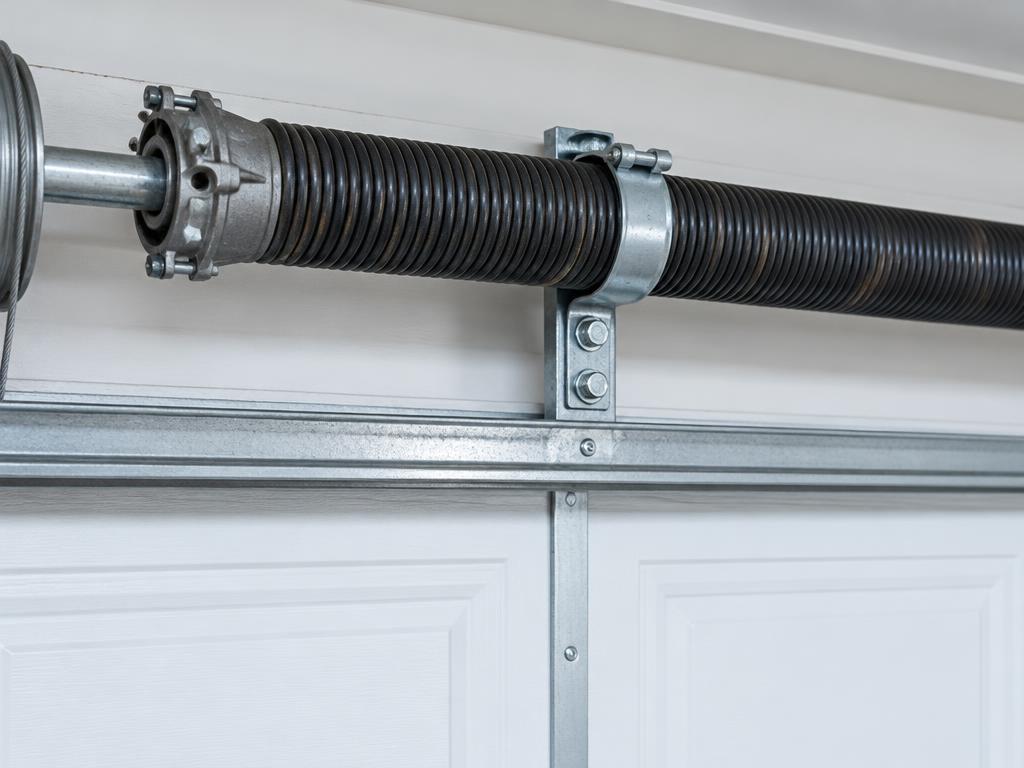
WHAT GARAGE DOOR SPRINGS DO
Garage door spring replacement in Toronto restores the counterbalance that supports the door's weight. Torsion spring replacement involves a system mounted on a shaft above the opening, while extension spring replacement concerns springs beside the horizontal tracks. These arrangements require different compatible components; neither should be selected by appearance alone. The opener moves a properly balanced door rather than carrying its full unsupported weight. If you notice a separated coil or a change in movement, keep the door unused and describe what you can see from a safe distance.
Without properly functioning springs, a garage door opener would need to work considerably harder to lift the door, and the door itself would be far more difficult to move manually. This is why springs are considered one of the most mechanically important parts of the entire system, even though they are often overlooked until something goes wrong.
Because springs operate under continuous tension, they are engineered to handle a certain number of open-and-close cycles before metal fatigue sets in, which is a normal part of how these components are designed to function over their lifespan.
SIGNS A SPRING MAY NEED REPLACEMENT
A garage door that suddenly feels much heavier than usual when opened manually is one of the more noticeable signs that a spring may have lost tension or broken. Visible gaps in a torsion spring's coils, or a spring that appears stretched or separated, are also clear indicators.
Some homeowners hear a loud bang coming from the garage, which can be the sound of a torsion spring breaking under tension. Other signs include a door that closes unevenly, appears crooked, or stops partway through its travel because the opener is struggling to compensate for the lost support the spring normally provides.
Because springs are mounted above or alongside the door and connected directly to the cables that help guide its movement, any change in how the door sits or moves can be worth having assessed.
WHY SPRINGS WEAR OUT OVER TIME
Garage door springs are rated for a certain cycle life, generally measured in the number of times the door opens and closes. A household that uses its garage door multiple times per day will naturally put more cycles on the spring over the course of a year compared to a door used less frequently.
Temperature fluctuations, which are a regular part of the Toronto seasonal calendar, can also affect metal springs. Cold weather can make springs more brittle, which is part of why broken springs are sometimes more commonly noticed during winter months. Humidity and moisture exposure over time can contribute to surface corrosion, which may weaken the metal gradually.
Because of these cumulative factors, spring wear is considered a normal part of garage door ownership rather than a sign that something was installed incorrectly, though the exact timeline varies by usage and conditions.
TORSION SPRINGS VS. EXTENSION SPRINGS
Torsion springs are mounted horizontally on a metal shaft above the garage door opening and twist to store energy as the door closes, releasing that energy to help lift the door when it opens. This design is common in many Toronto homes, particularly those with heavier insulated doors, because torsion springs tend to offer more consistent control over the door's movement.
Extension springs stretch along the upper tracks on either side of the door and are often found on older or lighter garage door setups. These springs extend and contract with the door's movement and are typically paired with safety cables that run through the center of the spring.
Both types are engineered to counterbalance a specific weight range, which means a replacement spring needs to match the door's weight and configuration appropriately rather than being treated as a generic, interchangeable part.
WHY SPRING REPLACEMENT REQUIRES PROFESSIONAL HANDLING
Torsion and extension springs operate under substantial stored tension, even when the door is sitting still in the closed position. The Consumer Product Safety Commission and garage door manufacturers consistently caution against homeowners attempting to adjust or replace these springs without specialized tools and training, since the tension involved can release suddenly if not handled correctly.
Technicians who work with garage door springs use specific winding bars and techniques designed for safely managing that tension throughout the replacement process. They also assess the correct spring size and wire gauge needed to match the specific door, since using a mismatched spring can affect how the door balances and operates going forward.
This combination of mechanical risk and the need for a correctly matched part is why spring replacement is treated as a specialized service within garage door repair rather than a simple parts swap.
WHAT HAPPENS DURING A SPRING REPLACEMENT VISIT
A typical spring replacement visit begins with the technician inspecting the current spring setup, including the type, size, and condition of the existing springs, as well as the overall balance of the door. This inspection helps confirm whether a spring issue is the primary concern or whether other components are also contributing to how the door is performing.
The technician will discuss the appropriate replacement spring for the specific door, taking into account the door's weight, material, and whether it is a single spring or dual spring setup. Many technicians also recommend replacing springs in pairs when a torsion system uses two springs, since one spring nearing the end of its cycle life often indicates the other is at a similar stage.
Once the new spring is in place, the technician typically checks the door's balance and movement across a few open-and-close cycles to confirm the system is working together as expected.
HOW SPRING CONDITION AFFECTS THE REST OF THE SYSTEM
A weakened or broken spring does not just affect how heavy the door feels. Because the opener is designed to work in partnership with properly functioning springs, a compromised spring can cause the opener's motor to work harder than intended, which may contribute to additional wear on the drive mechanism over time.
Cables connected to the spring system can also be affected, since they work together with the springs to guide the door's movement along the tracks. A spring issue left unaddressed can sometimes place extra strain on these cables, which is one reason technicians often inspect the full system rather than looking at the spring in isolation.
Addressing spring concerns as part of a broader system check can give homeowners a clearer picture of how their garage door is functioning overall, rather than focusing on just one isolated part.
SPRING REPLACEMENT CONSIDERATIONS FOR TORONTO HOMES
Toronto's seasonal temperature swings mean that garage springs are exposed to a wide range of conditions throughout the year. Garages that are unheated or only partially insulated may experience more pronounced temperature shifts, which can be a factor in how springs age over time compared to a climate-controlled space.
Homes with heavier insulated doors, which are increasingly common for energy efficiency, place additional demand on the spring system compared to lighter, non-insulated doors. This means the correct spring specification is especially relevant for these setups.
Local homeowners considering spring replacement benefit from having a conversation about their specific door type, approximate age, and how frequently it is used, since these details all play into what a technician would look for during an assessment.
CHOOSING A SUITABLE REPLACEMENT SPRING
Spring selection is based on the complete door configuration, not just the appearance of a broken coil. Ask the professional how the proposed specification relates to the door weight, drum arrangement and available space. If the door has been modified with insulation, windows or replacement sections, mention those changes. They may affect the balance calculation even when the outside looks much the same.
A cycle rating describes a tested operating expectation under defined conditions; it is not a promise of a particular number of years in your garage. Discuss how frequently the door is used and ask which specification is being proposed. Request the applicable product information and any written warranty terms before agreeing to work. Do not measure, loosen or unwind the spring yourself to collect these details.
Ask how the proposed garage door spring sizing accounts for the door weight, drum arrangement and any replacement sections. High-cycle garage door springs may be an option on a compatible system, but their cycle rating is not a promise of a particular number of years. A door counterbalance inspection should also consider the cables and supporting hardware. Mention added insulation or windows because changes in weight can affect the selection. Leave measuring, winding and tension adjustments to a qualified professional rather than approaching the spring to collect specifications.
GETTING IN TOUCH WITH GARAGE DOOR STANDARD
If you suspect a broken spring, stop using the door and call 647-560-8374 to discuss spring replacement in Toronto. Describe any visible separation or unusual movement without approaching the tensioned hardware. The request form is another way to leave the details, but it does not confirm an appointment. Ask about the proposed spring specification, inspection scope and availability before making a decision.
For broken garage door spring repair, request a written explanation of which components need replacement and why. Garage door balance testing after the work helps assess whether the complete system is operating as intended; it is not a task to attempt yourself on a damaged door. Toronto garage door spring service should be discussed with your actual door configuration and usage in mind. Keep the chosen spring specification and manufacturer's care guidance, and confirm pricing, availability and any applicable product terms before agreeing to the proposed work.
Images are illustrative; product details, pricing and availability require confirmation.