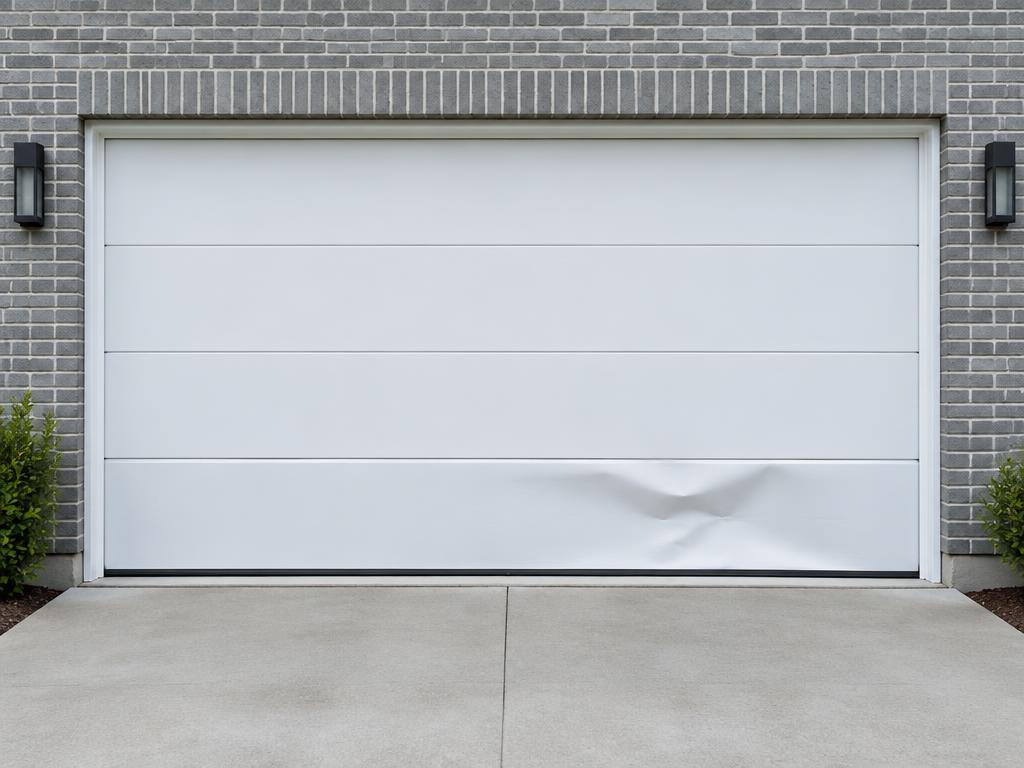
UNDERSTANDING GARAGE DOOR PANELS
Garage door panel replacement in Toronto starts with identifying the existing door and the extent of the damage. A sectional garage door repair may retain the sound sections when a compatible replacement is available, rather than automatically replacing the complete door. Dented garage door panels need more than an appearance check: creases can affect rigidity, hinges and travel through the tracks. Share the manufacturer and model if they are already accessible, and explain whether the damage followed an impact. Avoid operating a door that binds or appears structurally distorted.
Because the door is made up of individual panels rather than a single solid piece, damage to one section does not necessarily mean the entire door needs to be replaced. In many cases, a single panel can be replaced on its own, provided a matching replacement panel is available for that specific door model.
Understanding how panels fit together, including the hinges that connect them and the way each panel interacts with the rollers and tracks, helps explain why panel replacement is approached as a distinct service within garage door repair.
COMMON CAUSES OF PANEL DAMAGE
Panel damage often results from an impact, such as a vehicle backing into the door, a falling object striking the surface, or debris blown against the door during a storm. Dents, cracks, or bent sections are the most visible outcomes of this type of impact damage.
Over time, exposure to the elements can also affect panel condition. Steel panels may develop rust, particularly near the bottom edge where moisture and road salt can collect, while wood panels may warp or crack due to humidity changes between Toronto's seasons.
In some cases, panel damage is cosmetic and does not affect how the door operates, while in other cases a bent panel can interfere with how the door travels along the tracks, which is an important distinction a technician can help identify.
SINGLE PANEL VS. FULL DOOR REPLACEMENT
When damage is isolated to one section of the door, replacing that single panel can be a practical option, provided the same panel style and colour are still available from the manufacturer or a compatible supplier. This approach addresses the specific damaged area without requiring changes to the rest of the door.
There are situations where full door replacement becomes a more suitable path, such as when the door model is older and matching panels are no longer manufactured, when multiple panels show significant wear, or when the overall door has reached a point where its structural integrity is a broader concern.
A technician can help evaluate which approach fits a specific situation by examining the extent and location of the damage, the age and model of the existing door, and whether a matching panel can realistically be sourced.
MATCHING PANELS BY MATERIAL, STYLE, AND COLOUR
Finding a replacement panel that matches the existing door involves identifying the manufacturer, model, and specific panel design, since garage door styles vary widely in terms of panel texture, window placement, and overall profile. Many Toronto homes feature raised-panel steel doors, flat panel designs, or carriage-house style doors with decorative hardware.
Colour matching can also be a factor, particularly for doors that have been in place for several years, since paint and finish technologies change over time and an older colour may not have an exact modern equivalent. In some cases, a close match is achievable, while in others, repainting the full door may be discussed as part of achieving a consistent appearance.
Because of these variables, panel replacement often starts with identifying the door's manufacturer and model information, which may be found on a label inside the garage or determined through comparison with manufacturer catalogs.
INSULATED VS. NON-INSULATED PANEL CONSIDERATIONS
Many newer garage doors in Toronto include insulated panels, which consist of an outer and inner steel layer with insulating material, often polystyrene or polyurethane, sandwiched between them. When replacing a panel on an insulated door, the replacement needs to match this layered construction to maintain the consistency of the door's overall performance.
Non-insulated, single-layer steel panels are more straightforward in construction and are often found on older doors or detached garages that are not climate-controlled. Matching a replacement panel for these doors typically focuses on steel gauge, profile, and finish.
Technicians take these construction differences into account when sourcing a replacement panel, since using a mismatched panel type could create inconsistencies in weight or thickness across the door's sections.
THE PANEL REPLACEMENT PROCESS
Replacing a garage door panel typically begins with the technician securing the door in place and carefully disconnecting the damaged panel from the hinges and rollers that connect it to the adjacent sections and the tracks. Depending on the door's position on the track, this may involve additional steps to support the surrounding panels during the process.
The new panel is then fitted into place, reconnected to the hinges and rollers, and checked for proper alignment with the rest of the door. The technician verifies that the door moves smoothly through a full open-and-close cycle afterward, checking that the replaced panel does not create any new friction points along the track.
Throughout this process, attention is paid to how the new panel's weight compares to the original, since a significant difference could affect the door's balance and, by extension, the performance of the spring system.
WHEN A PANEL ISSUE SIGNALS A BROADER PROBLEM
A damaged panel occasionally points to an underlying issue rather than an isolated event. For example, repeated impacts in the same area might suggest a vehicle is regularly misjudging clearance, which is more of a usage pattern than a mechanical fault, but worth being aware of going forward.
In other cases, a bent panel can affect how rollers sit within the track, which may contribute to additional wear in that section if not addressed. A thorough inspection during panel replacement often includes a check of the surrounding rollers, hinges, and track alignment to confirm the rest of the system is unaffected.
Recognizing these connections helps technicians and homeowners understand panel replacement as part of the broader picture of the door's overall condition, rather than a purely cosmetic fix.
PANEL REPLACEMENT CONSIDERATIONS FOR TORONTO HOMES
Toronto's weather conditions mean that panels facing certain directions may experience more sun exposure, moisture, or temperature variation than others, which can occasionally lead to uneven wear across a single door. This is a detail worth mentioning to a technician if some panels appear to be aging differently than others.
Homeowners who are uncertain about their garage door's manufacturer or model can often find this information on a label located on the inside of the door or within the original installation paperwork, if available. Having this information on hand can help streamline the process of identifying a compatible replacement panel.
Because panel availability can vary depending on the age of the door, reaching out with details about the damage and the door's approximate age is a useful starting point for understanding what replacement options may exist.
COMPARING APPEARANCE WITH STRUCTURAL SUITABILITY
A replacement section that looks similar is not necessarily compatible. The joint profile, thickness, reinforcement and roller connection points all need to work with the existing door. Ask which manufacturer documentation supports the proposed match. An older finish may have faded, so request a realistic explanation of colour differences instead of assuming the replacement will be visually indistinguishable.
If a door has decorative hardware or windows, discuss how those details affect section sourcing and weight. A repair proposal should identify whether the damaged section can be replaced while retaining a suitable complete door. When replacement sections are unavailable, compare a full-door proposal on its own merits. Avoid makeshift repairs that hide a crease without resolving the way the damaged panel supports the door or travels through the track.
Insulated garage door panel replacement needs a compatible section profile, thickness and construction. Steel garage door sections that look alike may still have different joints, reinforcement and roller attachment points. Matching garage door panels also involves realistic expectations about colour and texture beside weathered material. Ask which manufacturer information supports the proposed replacement and whether refinishing is appropriate. If the model is discontinued, compare the practical scope of a complete door replacement rather than accepting a visually similar section that has not been confirmed as structurally suitable.
GETTING IN TOUCH WITH GARAGE DOOR STANDARD
An isolated damaged section may be repairable without changing the entire door, but compatibility needs checking first. Call 647-560-8374 about panel replacement in Toronto, or describe the damage in the form below. Share the manufacturer and model if they are already accessible. Ask about section availability, finish differences and the complete door condition before committing to a replacement.
Bottom garage door section replacement deserves particular care because the lower section can connect to tensioned lifting hardware. A garage door hinge inspection and balance review help establish whether surrounding components were affected by the damage. For residential overhead door panel repair, request a written proposal identifying the exact section, finish expectations and any related work. Keep the product information after installation and confirm how movement will be checked. Section availability, appointment timing, agreed costs and applicable product terms all need confirmation before work is arranged.
Images are illustrative; product details, pricing and availability require confirmation.