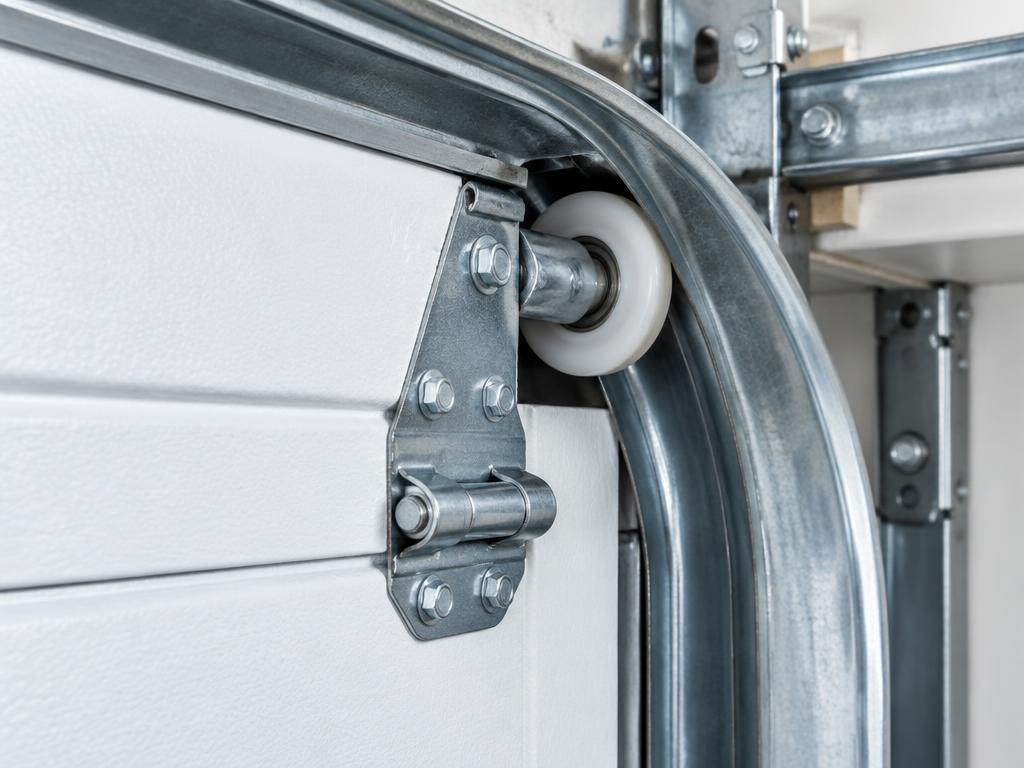
HOW ROLLERS AND TRACKS WORK TOGETHER
A garage door tune-up in Toronto focuses on how the moving hardware guides the door through its opening and closing cycle. Garage door roller replacement may be appropriate when wheels or bearings are worn, while garage door track alignment addresses a path that no longer guides the rollers correctly. These needs are related but not interchangeable. Describe whether vibration occurs throughout movement or at one point, without repeatedly using a potentially unsafe door. An assessment should consider the tracks, rollers, hinges and balancing system together before recommending adjustments or replacement parts.
The tracks themselves are typically made of galvanized steel and are mounted to the garage structure with brackets, maintaining a consistent, aligned path for the rollers to follow. When rollers and tracks are working well together, the door moves with a smooth, even motion from start to finish.
Because this system involves multiple rollers moving simultaneously along two parallel tracks, even a small amount of misalignment or wear in one area can affect how the entire door moves, which is why rollers and tracks are often evaluated together rather than separately.
SIGNS ROLLERS OR TRACKS NEED ATTENTION
A noticeably noisier garage door, particularly a grinding, squeaking, or rattling sound during operation, often points to roller wear or buildup of dirt and debris within the tracks. Rollers that appear worn, cracked, or flattened on one side are a visible indicator that they may no longer be rolling as smoothly as intended.
A door that jerks or hesitates at specific points during its cycle, rather than moving continuously, can suggest a track alignment issue or a roller that is catching rather than rolling freely. In more visible cases, a track may appear bent or separated from its mounting bracket, which can be seen by looking along its length.
Homeowners sometimes notice these symptoms gradually, with noise or hesitation increasing slowly over weeks or months as wear progresses, rather than appearing suddenly.
WHAT CAUSES ROLLER AND TRACK WEAR
Rollers, especially those made with nylon or plastic wheels, wear down over years of repeated use as the material gradually breaks down from friction against the track. Metal rollers with ball bearings can also wear over time if the bearings are not maintained, leading to increased friction and noise.
Tracks can become misaligned due to minor impacts, such as a vehicle bumping into a track bracket, or simply from the cumulative vibration of regular door operation loosening mounting hardware over time. Dust, leaves, and road salt residue can also build up within the track channel, creating resistance that affects how smoothly rollers move through it.
Toronto's seasonal debris, from fall leaves to winter salt and slush, means garage tracks can accumulate buildup at different points throughout the year, which is a factor in why periodic tune-ups are a useful part of garage door maintenance.
WHAT A ROLLER AND TRACK TUNE-UP INVOLVES
A tune-up typically starts with the technician inspecting each roller along the door for signs of wear, cracking, or uneven movement, along with a check of the tracks for alignment, dents, or buildup of debris. This inspection covers both the vertical tracks along the sides of the door opening and the horizontal tracks that extend into the garage ceiling.
Cleaning the tracks to remove accumulated dirt, debris, and old lubricant residue is often part of the process, since a clean track allows rollers to move with less resistance. Technicians also check that track brackets are securely fastened to the garage structure and that the tracks are properly aligned relative to each other.
If rollers are found to be worn beyond a reasonable point, replacing them with new rollers suited to the door's weight and usage is typically discussed as part of the tune-up, restoring smoother movement along the track system.
ROLLER MATERIAL OPTIONS
Garage door rollers are commonly available in a few different materials, each with its own characteristics. Nylon rollers tend to operate with less noise compared to older steel rollers, making them a popular choice for homeowners who want a quieter door, particularly in attached garages.
Steel rollers are generally known for their durability, though they can be noisier during operation, especially as they age. Some rollers include sealed ball bearings, which are designed to reduce friction and may require less frequent attention compared to open bearing designs.
The right roller choice often depends on the specific door's weight, how frequently it is used, and the homeowner's preferences regarding operating noise, all of which can be discussed with a technician during a tune-up visit.
TRACK ALIGNMENT AND WHY IT MATTERS
Properly aligned tracks keep the door moving along a consistent, predictable path from the moment it starts opening to when it reaches the fully open position. When tracks fall out of alignment, even slightly, the door can bind, jerk, or place uneven pressure on the rollers and hinges connected to each panel.
Checking alignment involves examining whether both the left and right tracks are positioned at matching heights and angles, and whether the horizontal sections running into the garage are level and properly pitched for the door's travel. A level or straightedge is often used by technicians to confirm this alignment during an inspection.
Because track alignment affects how evenly the door's weight is distributed during movement, addressing alignment issues is considered a key part of keeping the broader system, including the rollers, cables, and springs, working as intended.
HOW REGULAR TUNE-UPS SUPPORT THE OVERALL SYSTEM
Rollers and tracks interact directly with several other components of the garage door system, including the cables, which rely on smooth roller movement to maintain even tension, and the opener, which works harder if the door is not moving freely along the tracks. A tune-up focused on rollers and tracks can therefore have a broader positive effect on how the whole door performs.
Addressing roller and track wear before it becomes severe can also help avoid secondary issues, such as a roller coming off its track entirely, which can cause the door to become stuck in a partially open or closed position.
For households that use their garage door frequently throughout the week, periodic attention to rollers and tracks is a practical way to stay ahead of the gradual wear that comes with regular use.
ROLLER AND TRACK CARE BETWEEN PROFESSIONAL VISITS
Homeowners can keep an eye on visible track conditions by periodically checking for obvious debris buildup, such as leaves or dirt, within the track channel and removing what can be safely reached by hand without disassembling any components. Wiping down visible dust along the lower sections of the track is a simple observation task many homeowners can manage.
Listening for changes in operating noise over time and noting whether the door seems to hesitate at a consistent point during its cycle can help provide useful details to share with a technician during a future visit.
Avoiding forceful manual operation of a door that seems to be sticking is important, since pushing or pulling against resistance can place additional strain on rollers and tracks that are already experiencing wear.
DEFINING THE SCOPE OF A TUNE-UP
The phrase tune-up can mean different things, so ask which inspections and adjustments are included. A useful proposal separates routine maintenance from worn-part replacement and explains any additional work before it proceeds. Rollers, hinges, mounting points and track condition should be considered as a system. Lubrication alone cannot correct a bent track, a damaged roller bearing or a door that has lost proper balance.
After the assessment, ask what changed and which symptoms should prompt another inspection. The expected operating sound varies by door and opener, so compare the result with the condition documented before the visit rather than expecting complete silence. Keep a record of any replaced components and follow the specific maintenance guidance supplied for them. Do not loosen track brackets or attempt to straighten loaded hardware between visits.
Nylon garage door rollers can reduce some rolling noise when their specification suits the door, but they cannot correct damaged hinges or a distorted track. Noisy garage door maintenance should start with identifying the source rather than expecting lubrication to silence every component. Bent garage door track repair requires assessment of the damaged section and its mounting points; routine cleaning is not a substitute. Ask which symptoms were checked after the work, and keep the specifications for any replacement rollers so future care follows the correct manufacturer's guidance.
GETTING IN TOUCH WITH GARAGE DOOR STANDARD
If your door has become rough or noisy, call 647-560-8374 to discuss a roller and track assessment in Toronto. Tell us whether the change occurs throughout movement or at a particular point, without repeatedly operating a potentially unsafe door. The form below lets you leave those details for review. Confirm what the proposed tune-up includes and which additional repairs require separate agreement.
Garage door track cleaning removes buildup that can interfere with movement, while garage door hinge lubrication should use the product and locations specified by the manufacturer. Avoid applying lubricant indiscriminately inside the track. Residential overhead door maintenance should separate routine care from worn-part replacement and explain any additional work before it proceeds. Ask for an agreed inspection scope, costs and a record of the findings. Leave track adjustments and load-bearing connections to a qualified professional, and stop using the door if movement becomes uneven or hardware looks displaced.
Images are illustrative; product details, pricing and availability require confirmation.