WHAT A GARAGE DOOR OPENER DOES
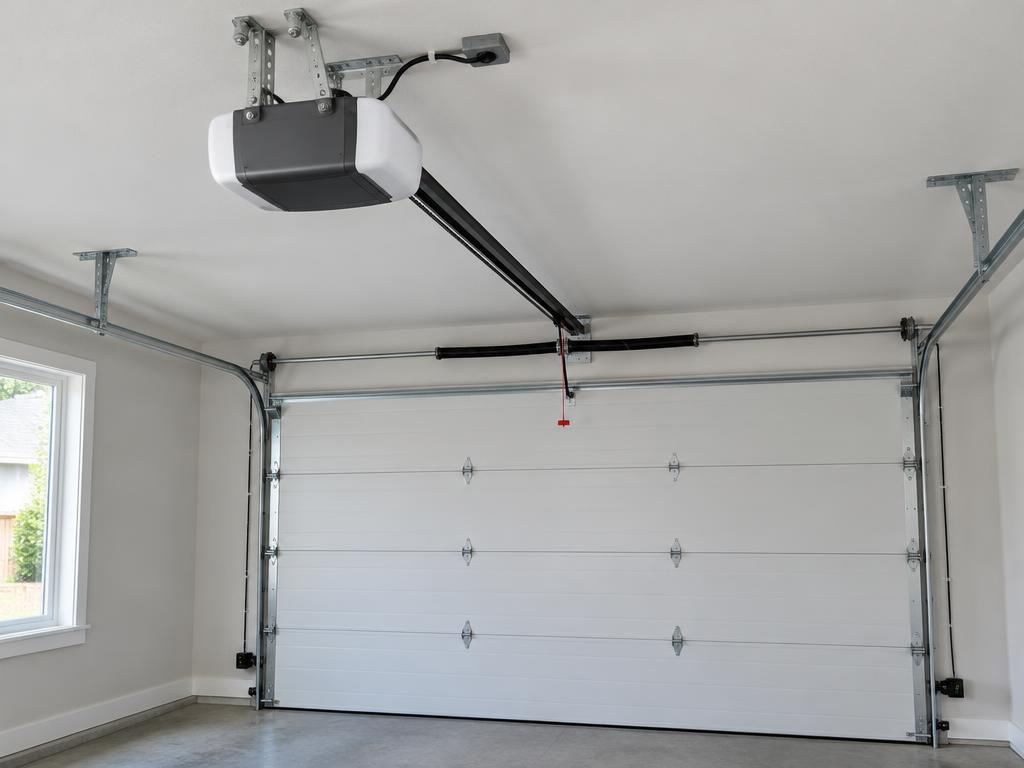
Garage door opener installation in Toronto begins with a mechanically sound door and a motor unit that fits the available space. Garage door opener replacement can be worth considering when an older unit has worn components, incompatible controls or features that no longer suit the household. Residential opener installation should account for mounting support, electrical access and the manufacturer's requirements before accessories are chosen. The springs counterbalance the door while the opener controls movement; fitting a new motor is not a substitute for correcting a damaged or unbalanced door.
Openers are generally operated through a wall-mounted control panel inside the garage, handheld remotes, and increasingly through smartphone apps that connect to the unit over a home Wi-Fi network. Many Toronto homeowners rely on their opener daily, making it one of the more frequently used mechanical systems in the home.
Because openers combine mechanical and electrical components, they are built with specific safety features required for residential use, which is an important consideration when it is time to install a new unit.
TYPES OF GARAGE DOOR OPENERS
There are several common opener drive types available for residential installation. Chain-drive openers use a metal chain to move the trolley that pulls the door along the track, and they are known for being a durable, traditional option. Belt-drive openers use a reinforced rubber belt instead of a chain, which tends to operate with less noise during use.
Screw-drive openers use a threaded steel rod to move the trolley, offering a different mechanical approach with fewer moving parts. Direct-drive openers are a newer design where the motor itself moves along a stationary chain, which can reduce vibration transferred to the door and garage structure.
Each type has its own characteristics in terms of noise level, maintenance needs, and mechanical design, which is why the right choice often depends on the specific garage setup, including whether the garage is attached to living space where noise might be more noticeable.
HORSEPOWER AND LIFTING CAPACITY
Garage door openers are rated by horsepower or comparable lifting force, and matching this rating to the weight of the door is an important part of selecting the right unit. A heavier insulated door typically requires an opener with a higher lifting capacity compared to a lighter, single-layer door.
Manufacturers such as LiftMaster, Chamberlain, and Genie publish specifications for their opener models, including recommended door weight ranges, which helps guide the selection process for a specific home. Installing an opener that is undersized for the door's weight can lead to the motor working harder than intended, while an appropriately matched opener supports smoother operation.
Technicians typically assess the door's weight and size as part of the opener selection conversation, taking into account whether the door is a single or double garage door, since double doors are generally heavier and may call for a different opener configuration.
SAFETY FEATURES BUILT INTO MODERN OPENERS
Modern residential garage door openers commonly include photoelectric safety sensors mounted near the bottom of the opening. Follow the specific manufacturer’s safety requirements for your unit. These sensors create an invisible beam, and if that beam is interrupted while the door is closing, the opener is designed to stop and reverse the door's movement.
Modern openers also include auto-reverse mechanisms that respond to resistance, stopping and reversing the door if it encounters an obstruction while closing. Many units also feature a manual release cord, allowing the door to be disconnected from the opener and operated by hand if needed, such as during a power outage.
When a new opener is installed, confirming that these safety features are properly set up and functioning as intended is a standard part of the installation process, since these features are central to how the opener is designed to operate safely in a home.
SMART AND CONNECTED OPENER FEATURES
Many newer garage door openers include connectivity features that allow homeowners to check the status of their garage door and operate it remotely through a smartphone app. Some models can send notifications when the door opens or closes, which some Toronto homeowners find useful for keeping track of the garage while away from home.
Compatibility with smart home platforms is another consideration, as some openers integrate with broader home automation systems. Homeowners interested in these features should check which systems a specific opener model supports before making a decision.
While these connected features add convenience, the underlying mechanical and safety components remain the most important factor in how reliably and safely the opener performs its core function of moving the garage door.
WHEN OPENER REPLACEMENT MAKES SENSE
Homeowners often consider a new opener installation when their existing unit is showing its age, such as struggling to lift the door consistently, making louder operating noises than before, or no longer responding reliably to remotes. In some cases, an opener may simply be outdated and lack the safety sensor technology required in current units.
A move into a new home with an older or unknown opener history is another common reason homeowners look into opener installation, since understanding the age and condition of the existing unit may not always be straightforward. Renovations that change the garage door itself, such as switching to a heavier insulated door, can also prompt a need for an opener with a different lifting capacity.
In each of these situations, discussing the specific household's needs, including how the garage is used and what features matter most, helps guide which opener option is the most sensible fit.
WHAT HAPPENS DURING AN OPENER INSTALLATION
Installing a new garage door opener involves mounting the motor unit, typically to the ceiling joists of the garage, connecting the rail and trolley system to the door, and wiring the wall control panel and safety sensors. The technician also sets up the remotes and any connected app features the homeowner wants to use.
Once installed, the technician tests the opener through several open-and-close cycles, checking that the safety sensors are properly aligned and that the auto-reverse feature responds appropriately. This testing phase helps confirm the opener and door are working together as intended before the installation is considered complete.
Homeowners are typically shown how to use the wall control, remotes, and any manual release mechanism, along with an explanation of the safety sensors and what to do if they ever appear misaligned or blocked.
OPENER INSTALLATION CONSIDERATIONS FOR TORONTO GARAGES
Attached garages that share a wall with living space may benefit from a belt-drive or direct-drive opener due to their generally quieter operation, which can be a relevant consideration for bedrooms or living areas located near the garage. Detached garages may have more flexibility in opener type since noise transfer into the home is less of a factor.
Temperature swings in Toronto garages, especially those without insulation, can affect how lubricants and mechanical parts perform, which is why selecting an opener rated for a range of conditions is worth discussing with a technician familiar with local installations.
Homeowners considering an opener installation can benefit from a conversation about their door's weight and size, the layout of their garage, and which features, such as app connectivity or battery backup, matter most for their household.
PLANNING EVERYDAY ACCESS AND OWNERSHIP
Consider who will use the opener and which access methods actually suit the household. A wall control and a small number of remotes may be sufficient, while another home may benefit from a keypad or supported connected features. Ask about compatibility, subscription requirements and network dependence before choosing a model. App access should be treated as an optional capability, not a substitute for a correctly balanced door and functioning safety devices.
Keep the model information and owner manual after installation. Review how remote access is managed when a device is lost or a household member moves out. If battery backup matters, confirm that the selected model includes it and understand its maintenance requirements. Arrange any required electrical work with an appropriately qualified professional rather than relying on extension cords or improvised power arrangements.
Electric opener troubleshooting should distinguish a drive-system fault from resistance in the door itself. Ask whether a belt drive motor is compatible with the door and appropriate for the noise preferences of an attached garage. Chain drive repair may be an alternative to replacement when the existing unit is serviceable and suitable parts are available. The decision should follow the model's condition and specifications rather than assuming one drive type solves every problem. Keep the model number and a record of the diagnosed fault to support a clear repair-versus-replacement comparison.
GETTING IN TOUCH WITH GARAGE DOOR STANDARD
Choosing a new opener starts with your existing door and the way you use your garage. Call 647-560-8374 to discuss opener installation in Toronto or request an assessment through the form below. Mention any space restrictions, existing opener model and features you are considering. Product compatibility, installation scope and appointment availability should be confirmed before purchasing equipment or arranging work.
Before approving work on a Toronto overhead door opener, confirm which controls and operating checks are included. Garage door safety sensors must be installed and tested according to the unit's instructions, without bypassing their protection. Remote programming should include a discussion of compatible existing devices and how to remove access for a lost remote. Garage door keypad setup is another option where supported, but model compatibility needs checking first. Ask for the agreed installation scope, price and care information, and confirm availability before buying equipment or expecting an appointment.
Images are illustrative; product details, pricing and availability require confirmation.